
Retiring a jersey number is the highest honor an NBA franchise can bestow. It means no one else will ever wear that number for that team again - a permanent statement that one player's contribution to a franchise was singular enough to put that digit off-limits for every player who comes after. But the history of retired numbers is more complicated, more surprising, and more trivia-rich than most fans realize. Some numbers hang in the rafters for players who never played a single minute for the team. Some hang twice for the same player. One number is banned at every arena in the league. And one franchise has retired so many numbers that new players have started showing up in triple digits just to find something available.
The First - and Only - League-Wide Retirement
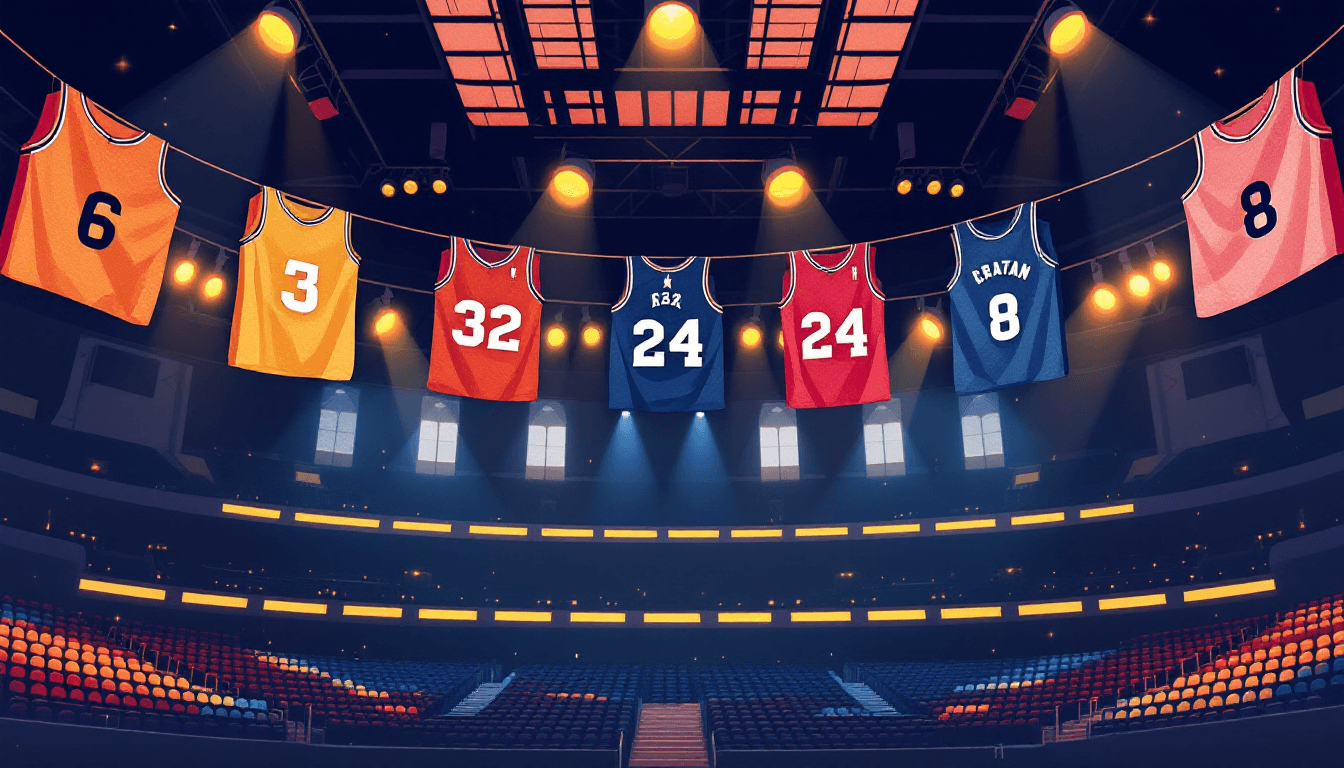
On August 11, 2022, the NBA did something it had never done before: it retired a number across all 30 franchises simultaneously. Bill Russell's No. 6 - worn during his entire 13-season career with the Boston Celtics from 1956 to 1969 - was permanently removed from circulation league-wide following Russell's death on July 31, 2022 at age 88.
The scale of the honor reflects the scale of the man. Russell won 11 NBA championships with Boston, was named MVP five times, and became the first Black head coach of a modern major American professional sports team when the Celtics named him player-coach in 1966. Off the court, he marched with Martin Luther King Jr., attended the 1963 March on Washington, and organized the first integrated basketball camp in Mississippi after the assassination of civil rights leader Medgar Evers. He was awarded the Presidential Medal of Freedom in 2011.
The league-wide retirement made Russell only the third athlete across the four major North American sports to have a number retired at that level - after Jackie Robinson's No. 42 across all of MLB in April 1997, and Wayne Gretzky's No. 99 across the entire NHL in 2000. Any current player wearing No. 6 when the announcement was made - including LeBron James - was grandfathered in and allowed to finish wearing it until they switched teams or retired. No new NBA player will ever be issued the number again.
Boston Celtics - 24 Retired Numbers and Counting
No franchise in North American professional sports has retired more jersey numbers than the Boston Celtics. Their 24 retired numbers - hanging from the rafters at TD Garden - surpass even the New York Yankees' celebrated 22. The list runs from Bill Russell (6) through the dynasty era to Kevin Garnett (5) and Paul Pierce (34), whose number is the most recent addition to the Boston rafters.
The Celtics' dynasty years produced a nearly unprecedented concentration of Hall of Fame talent: Bob Cousy (14), Bill Sharman (21), Tom Heinsohn (15), John Havlicek (17), Dave Cowens (18), Jo Jo White (10), and more. That depth - 11 championships between 1957 and 1969 alone, plus two more in 1974 and 1976 - is why Boston's rafters look like a math problem with too many variables.
The volume has created a genuinely unusual logistical challenge. With single and double-digit numbers largely spoken for, recent Celtics have had to reach for numbers most teams never touch. The situation is real enough that commentators regularly cover it as an ongoing franchise quirk - a crowded ceiling that reflects a singular winning legacy.
One wrinkle worth knowing: Jim Loscutoff, a seven-time champion with the Celtics in the late 1950s and early 1960s, asked the team not to retire his No. 18 so future players could use it. Boston honored his wish and instead raised a banner bearing his nickname, "LOSCY." The team later retired No. 18 anyway for Dave Cowens - leaving Loscutoff as the only Celtics legend honored on the banners without a number next to his name.
Los Angeles Lakers - Two Numbers, One Player
The Los Angeles Lakers have retired 14 numbers total, but the story that stands apart from all the others involves a player who wore two completely different numbers across two consecutive decades - and had both retired on the same night.
On December 18, 2017, the Lakers retired Kobe Bryant's No. 8 and No. 24 in a halftime ceremony at Staples Center. It was the first time any franchise in NBA history had retired two different numbers for the same player. Bryant wore No. 8 for his first ten seasons, winning three consecutive championships from 2000 through 2002. He switched to No. 24 for his final ten seasons, adding two more titles in 2009 and 2010. Both eras were complete enough, and distinct enough, that the franchise decided both deserved permanent retirement.
The rest of the Lakers' retired numbers tell the story of the most decorated franchise in the sport's history outside of Boston: Wilt Chamberlain (13), Elgin Baylor (22), Magic Johnson (32), Kareem Abdul-Jabbar (33), Shaquille O'Neal (34), Jerry West (44), James Worthy (42), Gail Goodrich (25), Jamaal Wilkes (52), George Mikan (99), Pau Gasol (16) - whose No. 16 was retired in March 2023 - and Michael Cooper (21), retired in January 2025.
Three Teams, One Player - The Rare Triple Retirement
Only three players in NBA history have had their jersey number retired by three different franchises: Wilt Chamberlain, Pete Maravich, and Shaquille O'Neal.
Wilt Chamberlain's No. 13 hangs in the rafters of the Golden State Warriors, the Philadelphia 76ers - retired on March 18, 1991 - and the Los Angeles Lakers, honoring three distinct chapters of one of the most statistically dominant careers in the sport's history.
Pete Maravich's situation is more unusual. His No. 7 was retired by both the Utah Jazz and the New Orleans Pelicans - the latter retiring his number to honor his time with the New Orleans Jazz before the franchise relocated to Utah. The Atlanta Hawks later retired his No. 44 in 2017, making Maravich the first player to have two different numbers retired across three teams.
Shaquille O'Neal became the third member of this club in February 2024, when the Orlando Magic retired his No. 32 - the first number the franchise had ever retired. The Lakers had already honored his No. 34 in April 2013, and the Miami Heat had retired his No. 32 in December 2016. Three organizations, three different eras of dominance, one enormous legacy.
The Players Retired by Teams They Never Played For
One of the strangest categories in retired-number history: players whose numbers were raised to the rafters by teams they never suited up for.
The most famous example is Michael Jordan. On April 11, 2003, the Miami Heat retired Jordan's No. 23 - making it the first number the young franchise had ever retired, for a player who spent his entire career with the Chicago Bulls and Washington Wizards, never once wearing a Heat uniform. Heat president Pat Riley called it a tribute to the greatest player in the game's history. "The guy has been the greatest player in the history of the game," Riley said, "and I think it wouldn't be a bad idea for every team in this league to hang his number in the rafters as a reminder of what greatness is all about." The Bulls had already retired Jordan's 23 on November 1, 1994.
The New Orleans Pelicans' retirement of Pete Maravich's No. 7 follows a similar logic - the Pelicans technically inherited the legacy of the New Orleans Jazz despite having no direct lineage to that franchise. The honor connects the city's basketball history across a franchise relocation that split the team's identity in two.
The Most Commonly Retired Numbers
Across all 30 franchises, some numbers appear on retirement banners far more often than others.
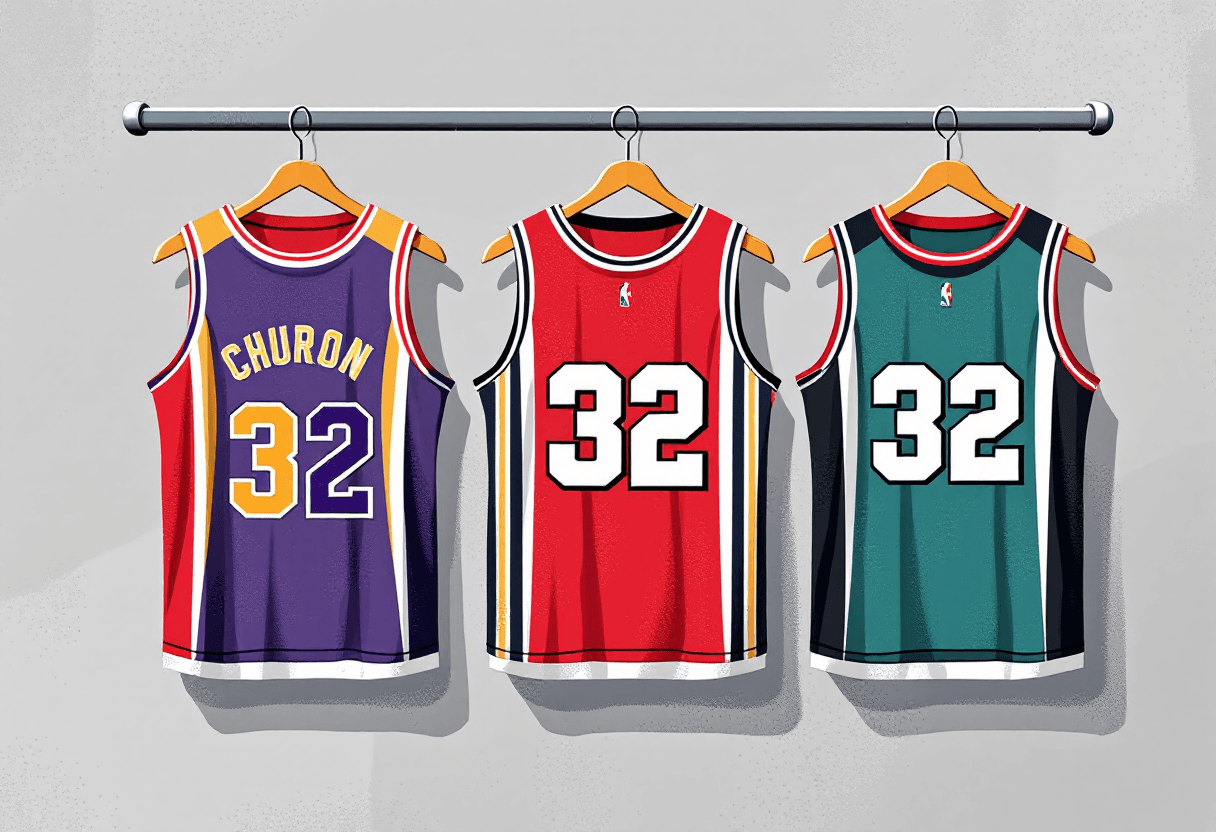
No. 32 is retired by more NBA teams than any other number - eleven franchises have raised it to their rafters. The reason is a generational concentration of greatness: Magic Johnson wore 32 with the Lakers, Julius Erving wore 32 with the New Jersey Nets, Shaquille O'Neal wore 32 with the Heat and later the Magic, Karl Malone wore 32 with the Jazz, Bill Walton wore 32 with Portland, Kevin McHale wore 32 with Boston - an extraordinary run of Hall of Famers clustered around one digit.
No. 33 is close behind, driven primarily by Kareem Abdul-Jabbar's presence in both Milwaukee and Los Angeles, alongside Larry Bird's No. 33 with Boston, Patrick Ewing's No. 33 with New York, and Scottie Pippen's with Portland and Houston.
No. 23 is the most culturally iconic retired number in basketball - Michael Jordan's number hangs in Chicago, and the Heat tribute retirement means it is honored at two arenas for arguably the greatest player of all time.
The Double Retirements - Same Number, Two Homes
Beyond the triple honorees, a group of players have had their number retired by exactly two different franchises - each reflecting a career substantial enough to earn permanent honor at multiple stops.
Kareem Abdul-Jabbar had his No. 33 retired by both the Milwaukee Bucks and the Los Angeles Lakers, reflecting a career that produced six MVP awards split between two dynasties. The Bucks retired it to honor the player who averaged 30.4 points and 15.3 rebounds across 467 games and delivered the franchise's only championship in 1971. The Lakers retired it for the player who anchored five more.
Oscar Robertson wore No. 14 for his years with the Cincinnati Royals and No. 1 with the Milwaukee Bucks - and both numbers were retired, by the Kings (honoring the Royals legacy) and the Bucks respectively. Robertson refused to let a Bucks teammate give up No. 14, so he switched to No. 1 when he arrived in Milwaukee. Both numbers now honor his legacy.
Clyde Drexler had his No. 22 retired by both Portland and Houston, the two franchises where he reached his highest level - including the 1992 Blazers Finals run and the 1995 championship with the Rockets alongside Hakeem Olajuwon.
Vince Carter's No. 15 was retired by the Toronto Raptors in November 2024 - the first number the Raptors had ever retired - and the Brooklyn Nets followed by also retiring his 15 in January 2025, honoring a 22-season career that began with one of the most captivating runs of individual brilliance the league had seen in decades.
Charles Barkley had his No. 34 retired by both the Philadelphia 76ers and the Phoenix Suns, the two teams that defined his MVP-level prime.
The Celtics' Tribute to Their Architect
Not every retired number belongs to a player. The Boston Celtics retired No. 2 for Arnold "Red" Auerbach - the architect of the dynasty, the coach of nine championships, the general manager who built more. Auerbach never wore No. 2 as a player. Boston retired it in 1985 in recognition that without him, none of the other 23 banners would exist. The number was chosen as a tribute to the coach himself - a permanent acknowledgment that the Celtics' identity was inseparable from the man who constructed it.
The Utah Jazz took a different approach to honoring a non-player. The franchise raised a banner with a purple microphone and broadcaster Rod Hundley's name - "Hot Rod" - to the rafters, marking the 35 years Hundley spent as the voice of the Jazz before his retirement in 2009. No number, just a microphone: one of the most distinctive tributes in the sport.
New York Knicks - Eight Numbers, Two Eras
The New York Knicks have retired eight player numbers, a list that maps neatly onto the two championship-adjacent eras of the franchise: the championship teams of 1970 and 1973, and the Patrick Ewing era of the late 1980s and 1990s.
From the title years: Walt Frazier (10), Willis Reed (19), Dave DeBusschere (22), Bill Bradley (24), Dick Barnett (12), Earl Monroe (15), and Dick McGuire (15) - Monroe and McGuire share the number, a distinction unique to Knicks history. From the modern era: Patrick Ewing's No. 33 was raised to the Madison Square Garden rafters in 2003.
The Knicks' retired-number list is a clear record of exactly when the franchise was competitive enough to produce legends. Everything before 1970 and everything after 1994 is conspicuously absent.
What the Numbers Tell Us
Read the full landscape of NBA retired numbers and a few clear patterns emerge. Winning produces retirement ceremonies - the franchises with the most retired numbers are, almost without exception, the franchises with the most championships. The Celtics' 24 banners sit at the top precisely because the 1957-1969 dynasty created more Hall of Famers than most franchises produce across their entire existence.
The multi-team retirements tell a different story: the most honored players were those whose impact was large enough that more than one city felt ownership over their legacy. Wilt Chamberlain changed the game in Philadelphia, San Francisco, and Los Angeles. Shaquille O'Neal won titles in Los Angeles and Miami and helped establish the very idea of a franchise in Orlando. The number doesn't belong to the team - it belongs to the player, and the teams are competing to be the ones who get to claim it.
And then there are the anomalies - Jordan in Miami, the LOSCY banner in Boston, Rod Hundley's microphone in Utah - that remind you the whole practice is more about storytelling than bookkeeping. Retiring a number is a franchise declaring that one person's time with the team was too significant to let anyone else borrow the digits they wore. Sometimes that declaration is straightforward. Sometimes it's a tribute. Sometimes it's just a city refusing to let go.
Related Reading
- Fascinating NBA Number Facts: Stats That Will Surprise You
- NBA Awards History: MVPs, DPOYs, and More
- The Greatest NBA Players Without a Championship Ring
- How Well Do You Know NBA Dynasty Teams?
- NBA Logo Quiz: Can You Name All 30 Teams by Their Logo?
- NBA Teams Quiz: How Well Do You Know All 30 Franchises?
- One-Team Legends: NBA Stars Who Spent Their Entire Career With One Franchise
Retired jersey numbers and the players behind them show up constantly across our daily games - from team affiliations in Connections to player identification clues in Who Am I?. Test your knowledge of NBA history and see how well you know the legends whose numbers were permanently taken off the board.